Herculaneum V.7. Casa di Nettuno e Anfitrite or House of Neptune and Amphitrite.
Part 1 Part
2 Part 3 Part
4 Part 5 Part 6 Part
7 Plan

V.7 Herculaneum, March 2014.
Doorway leading to internal
courtyard, with doorway to triclinium, on right.
Foto Annette Haug, ERC
Grant 681269 DÉCOR.

V.7 Herculaneum, October 2014.
Doorway leading to internal courtyard. Photo courtesy of Michael Binns.

V.7 Herculaneum, September 2015. Doorway threshold at west end of corridor.
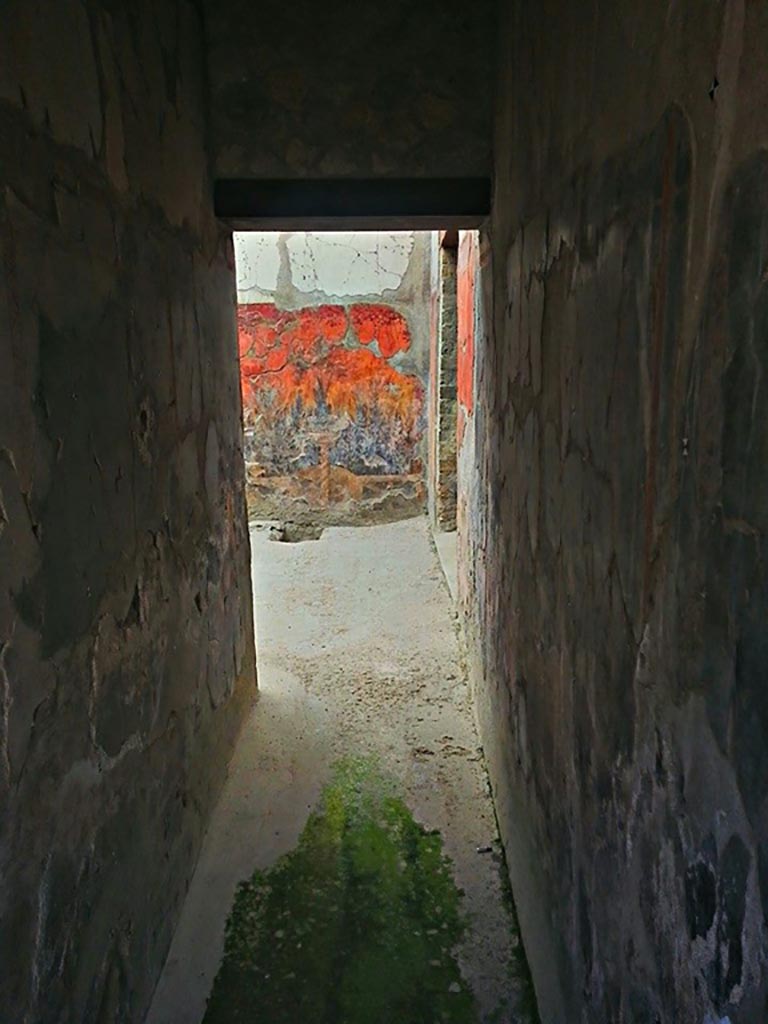
V.7 Herculaneum, photo taken between October 2014 and November 2019.
Corridor leading to the south-east corner of the internal courtyard. Photo courtesy of Giuseppe Ciaramella.
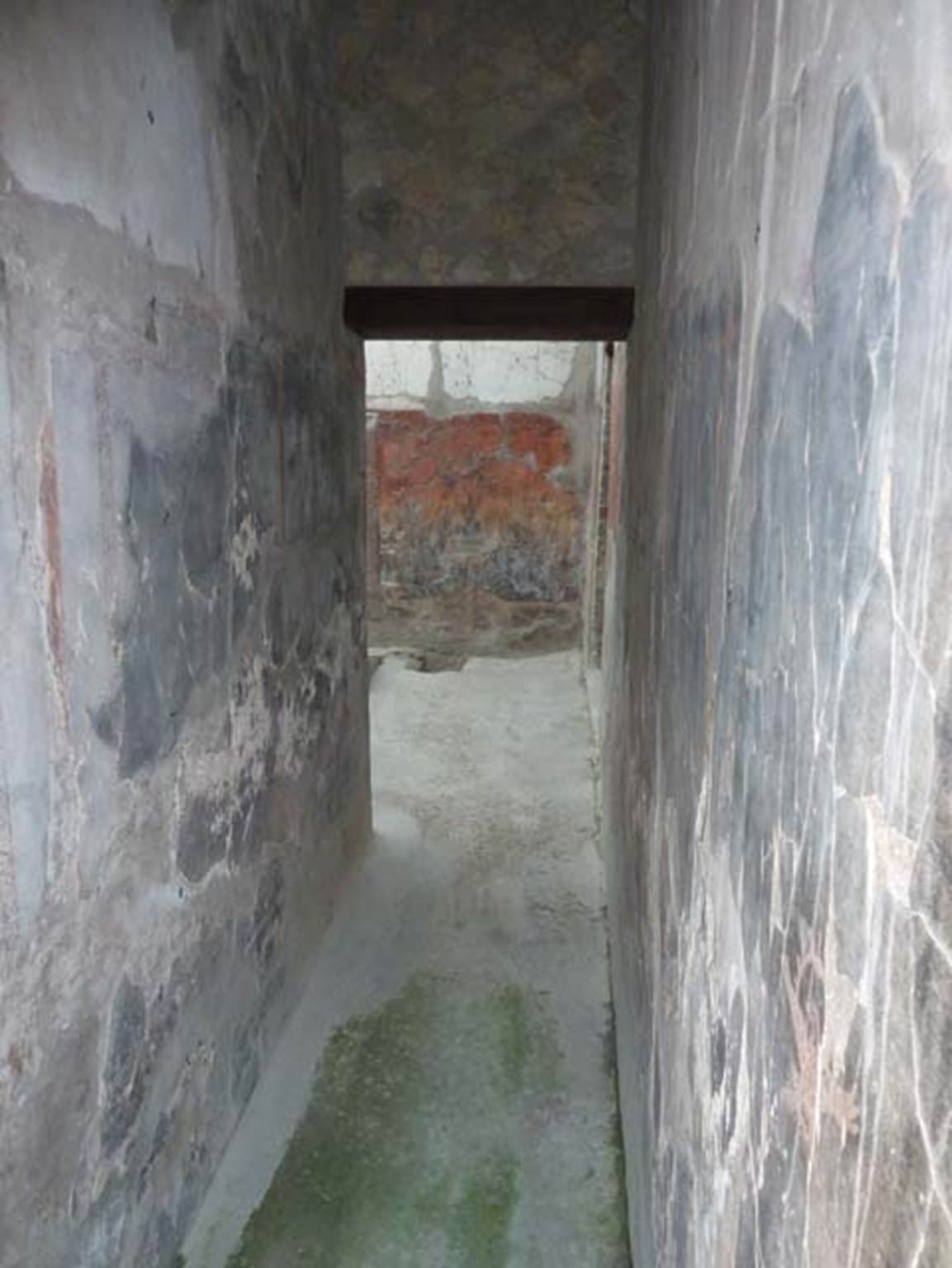
V.7 Herculaneum, September 2015. Corridor leading to the south-east corner of the internal courtyard.

V.7 Herculaneum, June 2014. Corridor leading to the south-east corner of the internal courtyard. Photo courtesy of Michael Binns.
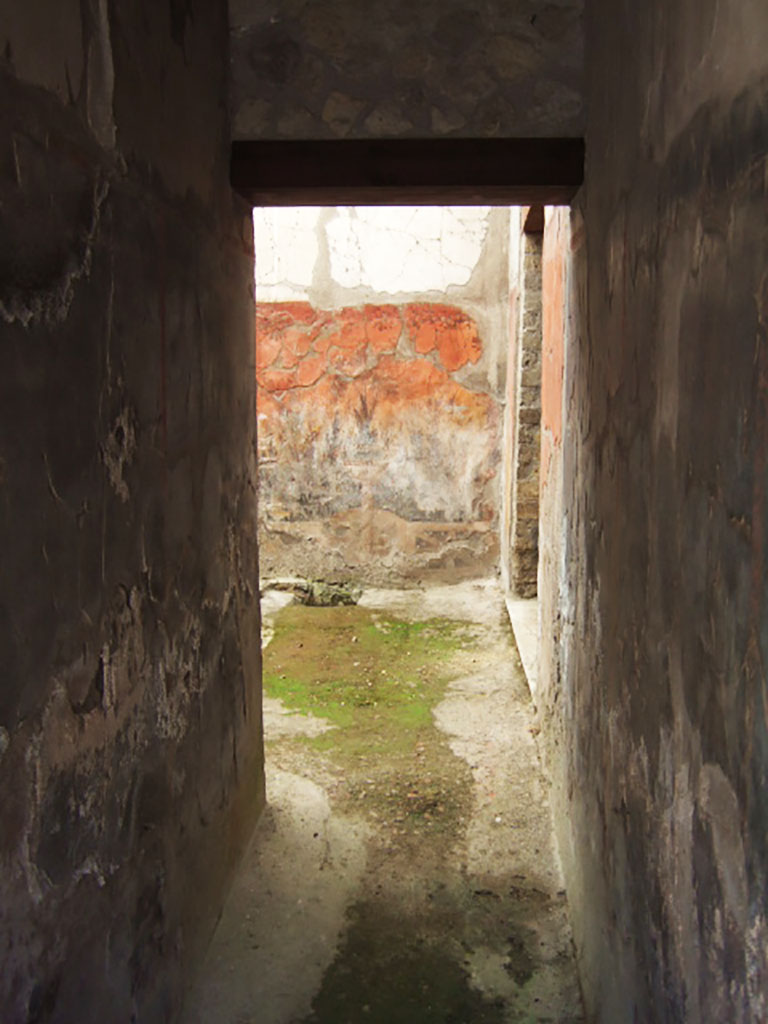
V.7 Herculaneum. May 2006. Corridor leading to the south-east corner of the internal courtyard.
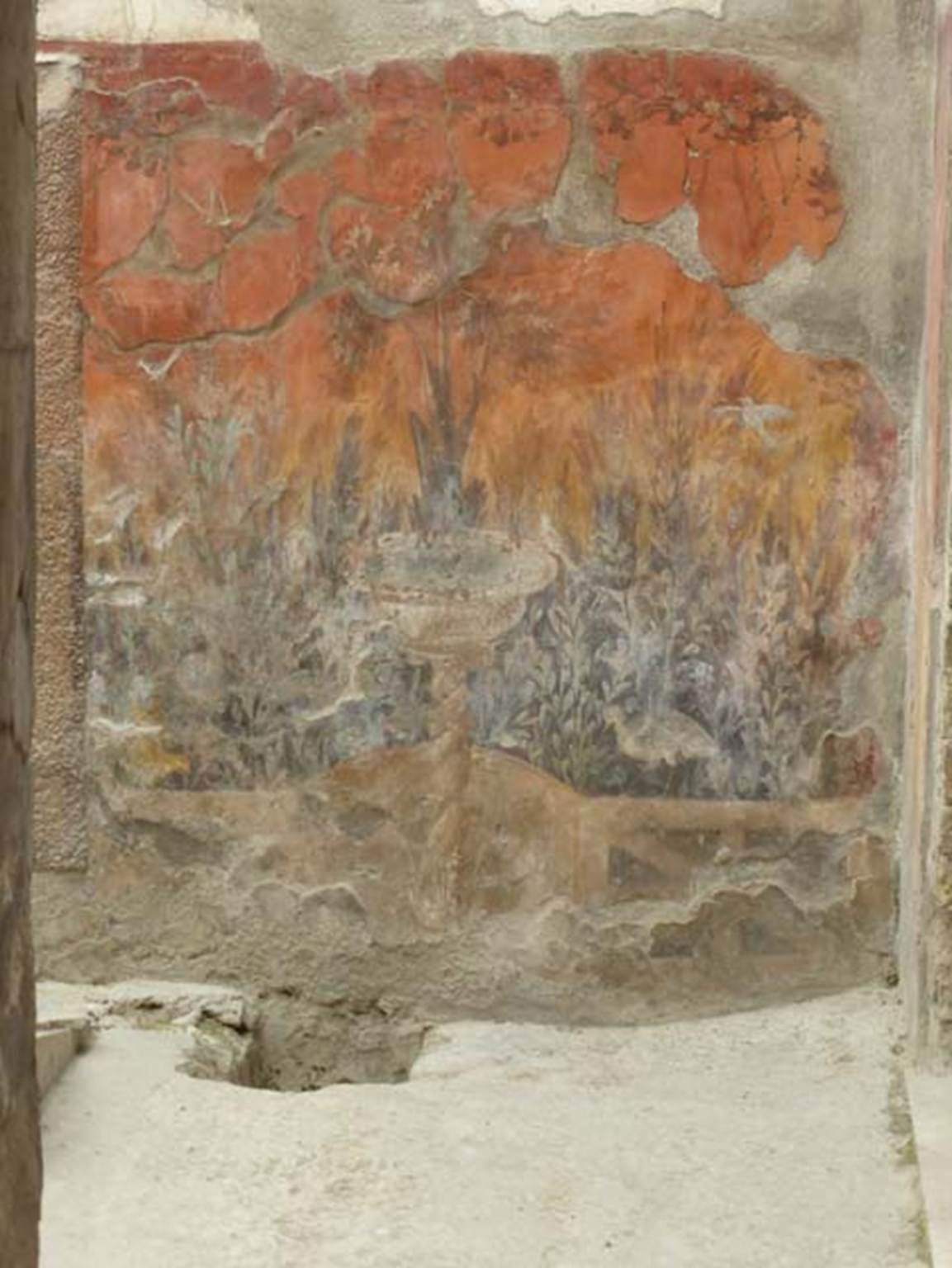
V.7 Herculaneum, June 2014.
South-east corner of internal courtyard with garden painting with fountain on east wall. Photo courtesy of Michael Binns.
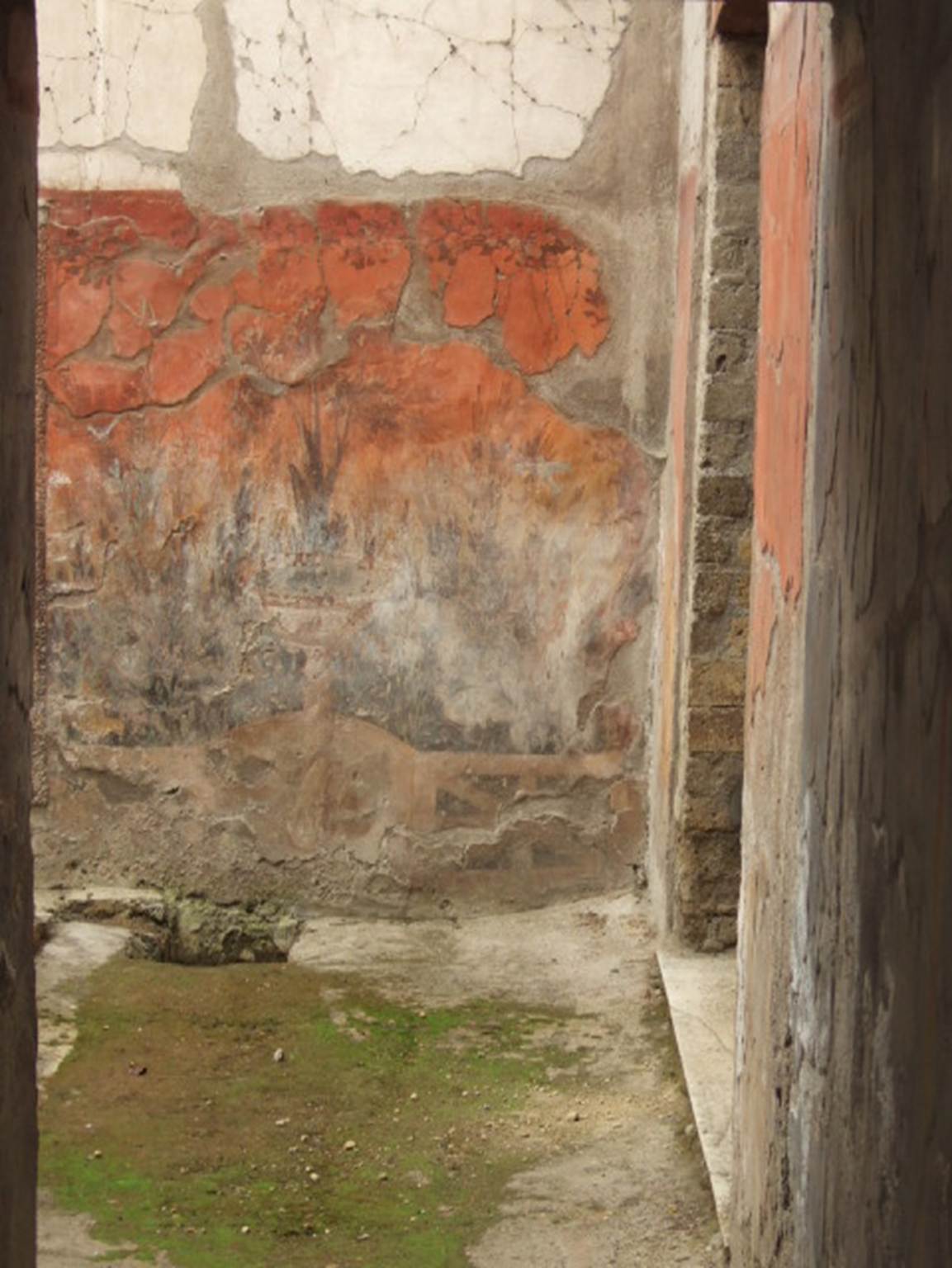
V.7 Herculaneum. May 2006.
South-east corner of internal courtyard with garden painting with fountain on east wall.
The doorway from the triclinium can be seen in the south wall.
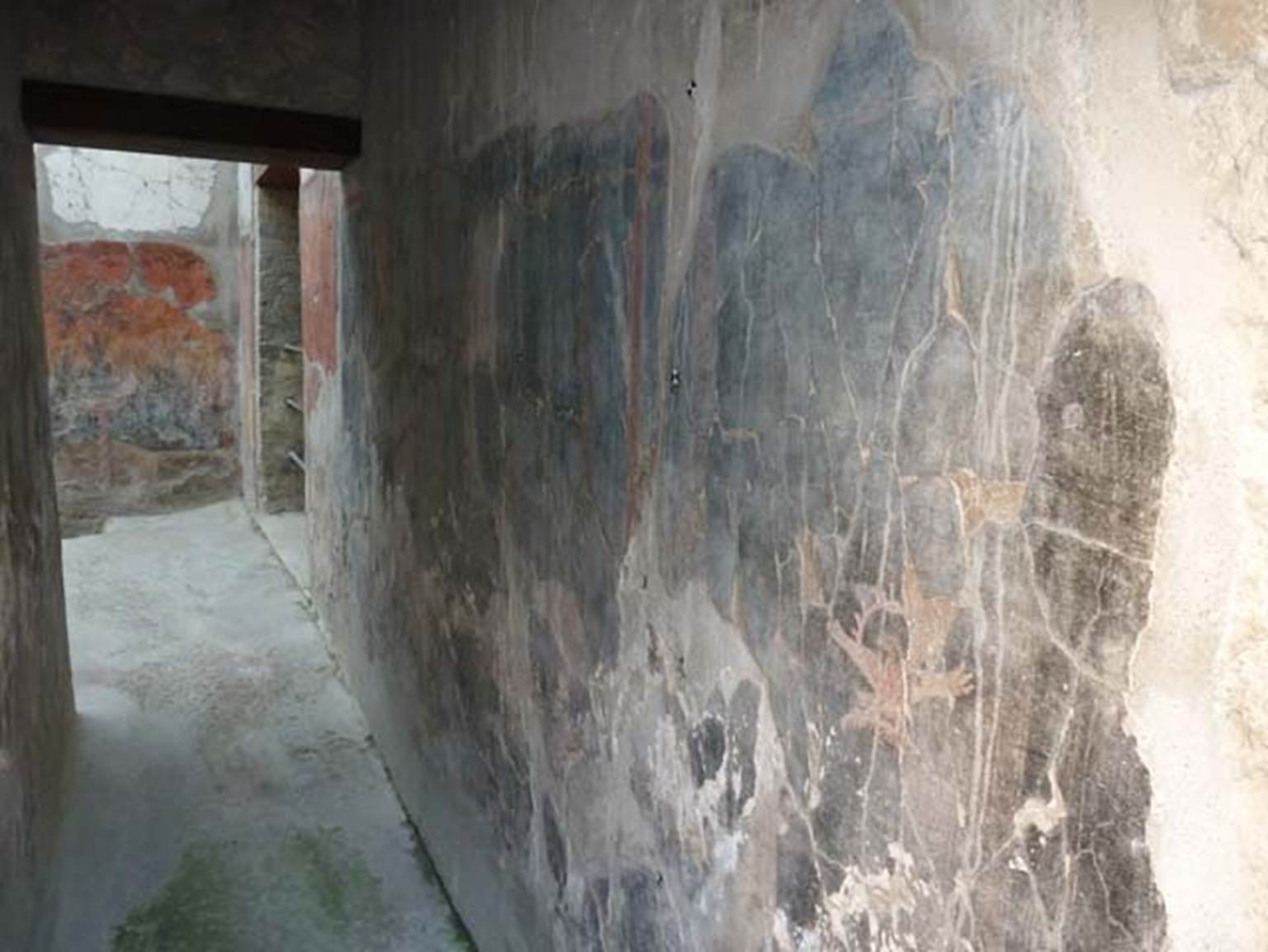
V.7 Herculaneum, September 2015. Looking along south wall of corridor leading to internal courtyard.
At the far end is a doorway to the courtyard from the triclinium.
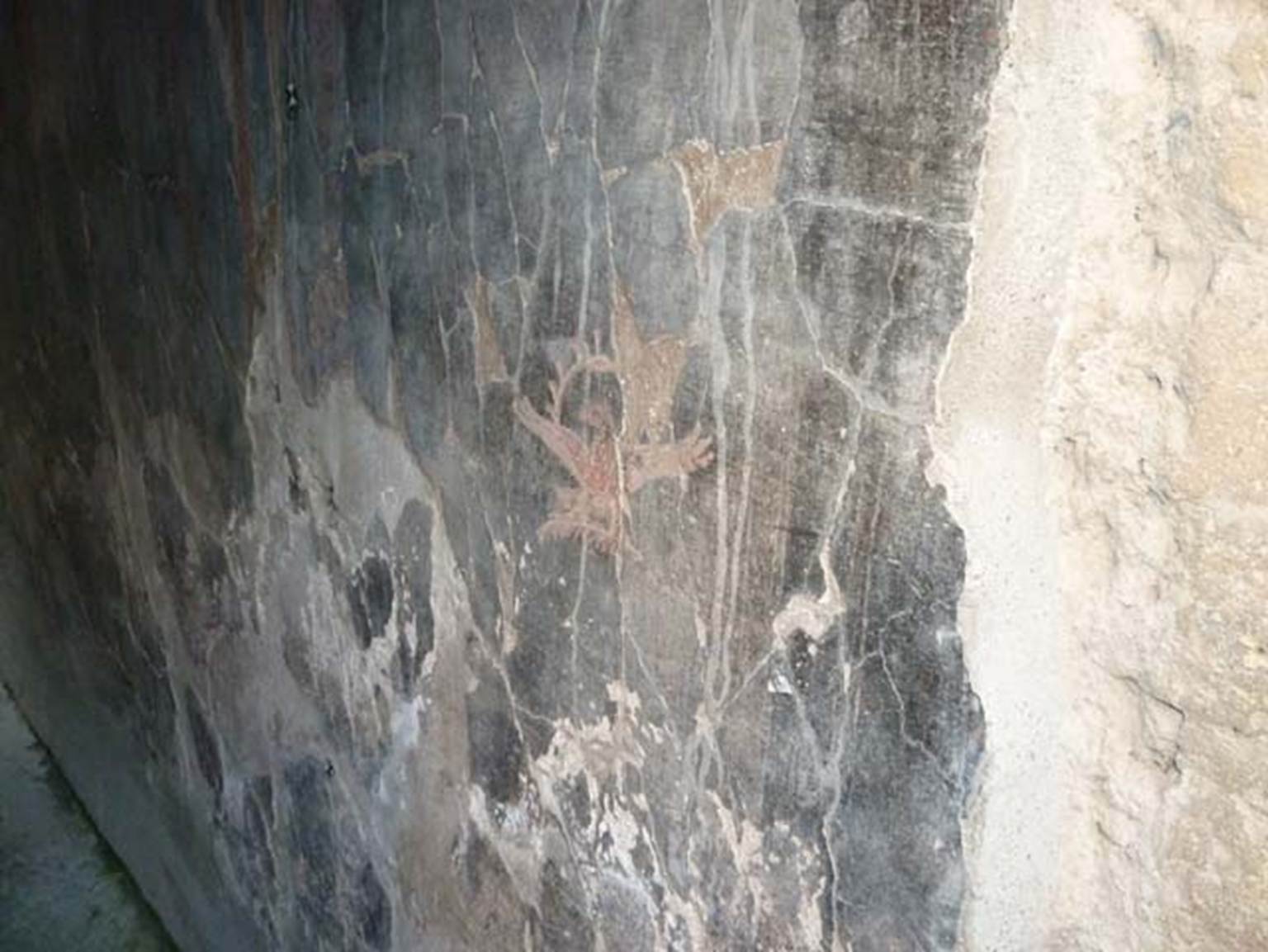
V.7 Herculaneum, September 2015. South wall of corridor.
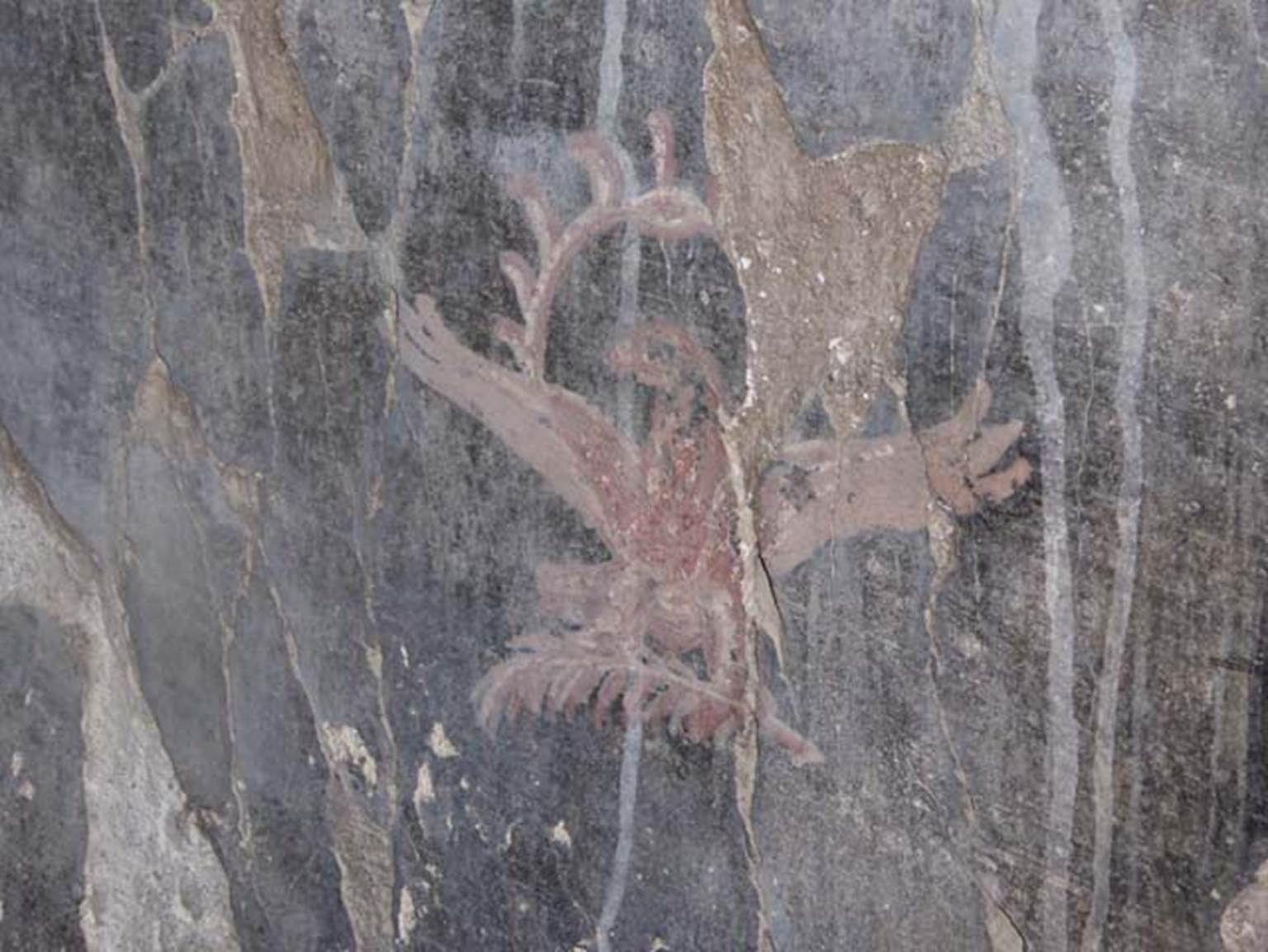
V.7 Herculaneum, October 2014.
Detail of painted bird from south wall of corridor leading to internal courtyard. Photo courtesy of Michael Binns.
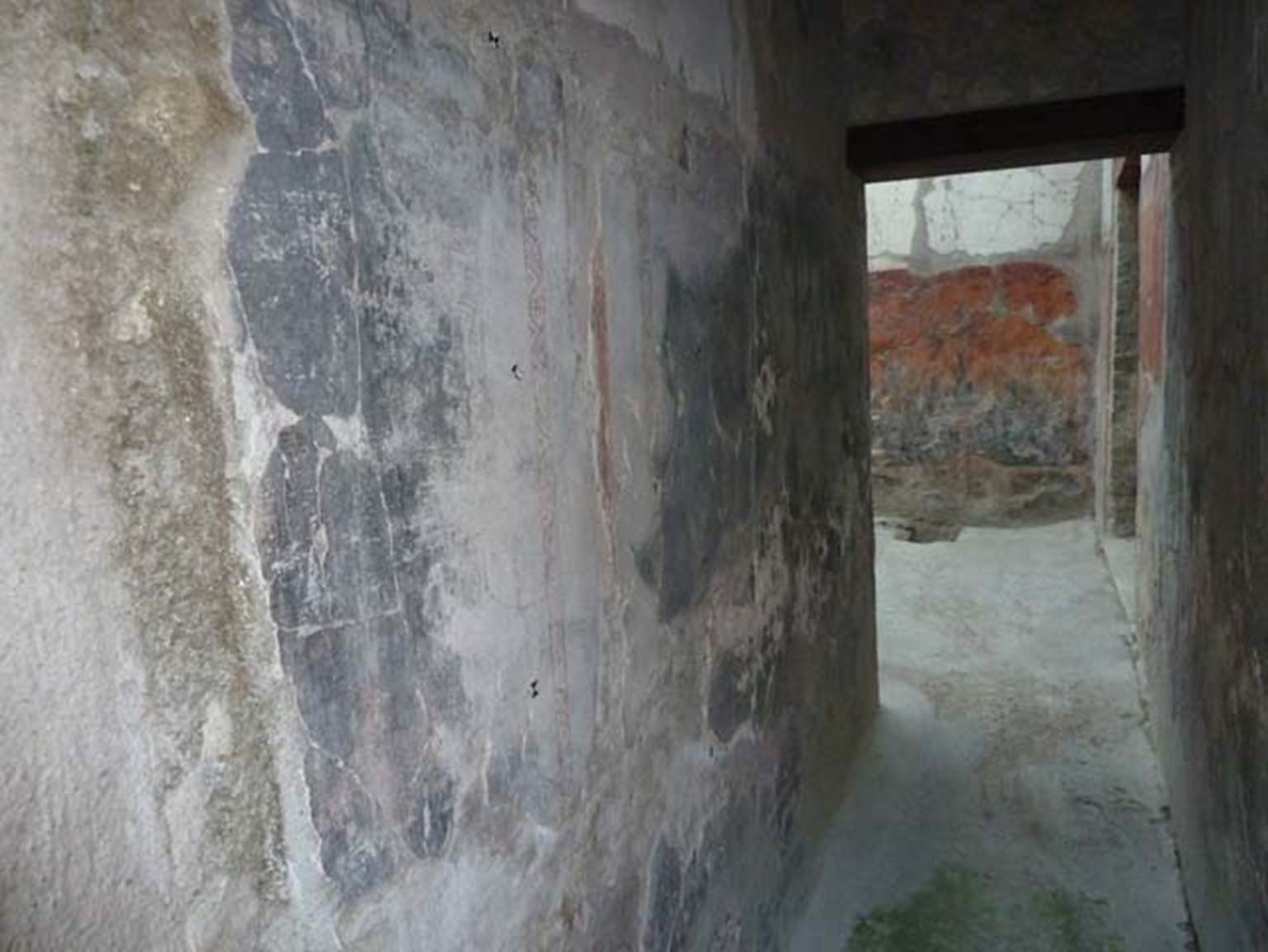
V.7 Herculaneum, September 2015. North wall of corridor.

V.7 Herculaneum, September 2015. Two doorways in south-east corner of atrium.
The central one leads towards the internal courtyard (no access) and the other, on the right, leads into the triclinium.

V.7 Herculaneum, September 2015. Looking east across triclinium.

V.7 Herculaneum, June 2022. Looking east across triclinium with digital reconstruction.
The Archaeological Park of Herculaneum is
working on the creation of the Digital Museum (MuDE): a real digital ecosystem
of cultural heritage, with a marked emphasis on the integration between real
and virtual to capture the interest of new audiences and make the experience of
the visit is more exciting even for those who are already passionate about
history and archaeology. An “open” database of knowledge of the Herculaneum
heritage, both at a scientific level and for a public of non-experts. The
intent is to substantially expand the cultural offer of the Park and at the
same time make a plurality of structured data, floor plans, 3D models, virtual
reconstructions, high-resolution photographs, archival documentation and
scientific content accessible.
In fact, the service contract that starts the
activities of the MuDE (Digital Museum of Herculaneum), the planning of which
was carried out by the Packard Humanities Institute thanks to a collaboration
with the Herculaneum Park in return for European funding for digitisation from
the Ministry of Culture, was signed recently.
Users will have the possibility to dynamically
access all the information available on a specific topic, artifact or
archaeological context by easily linking the information of their interest. The
MuDE platform will allow each user to build their own virtual or real thematic
itinerary within the archaeological area. Technology, interoperability of data
and more generally of knowledge, enhancement of the territory, services for
citizens, employment prospects for operators in the sector, sustainable and
inclusive development are the objectives to which the entire project aims.
See Parco-archeologico-di-Ercolano-Packard-Humanities-Institute
- Press Release
Photo © Parco Archeologico di Ercolano.
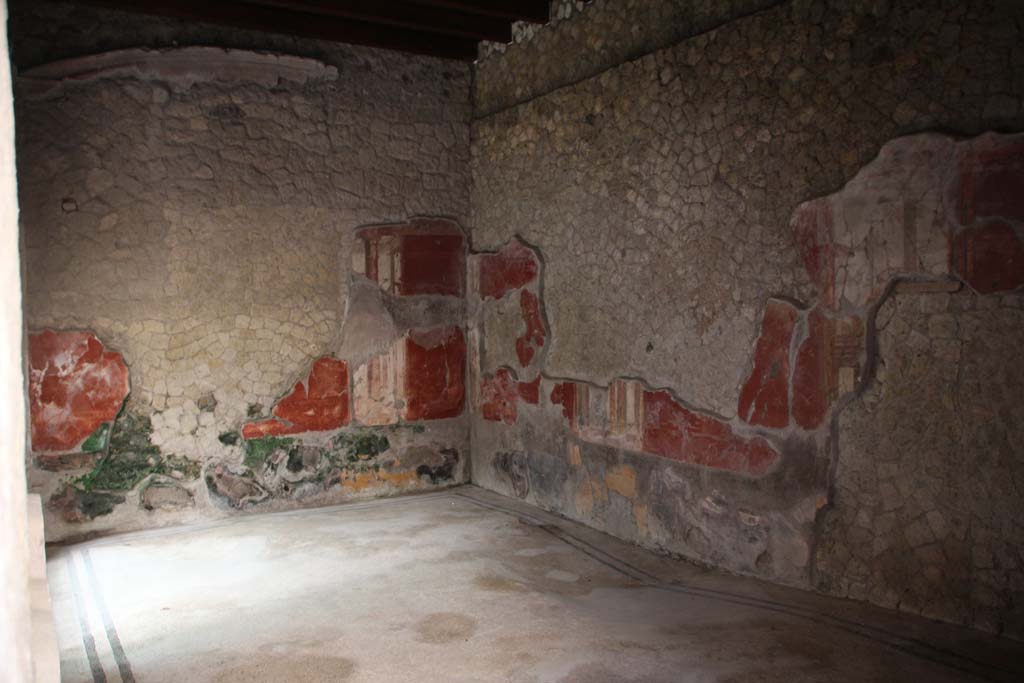
V.7 Herculaneum, April 2014. Looking towards the south-east corner of the triclinium, Photo courtesy of Klaus Heese.

V.7 Herculaneum, October 2014. Looking east across triclinium. Photo courtesy of Michael Binns.
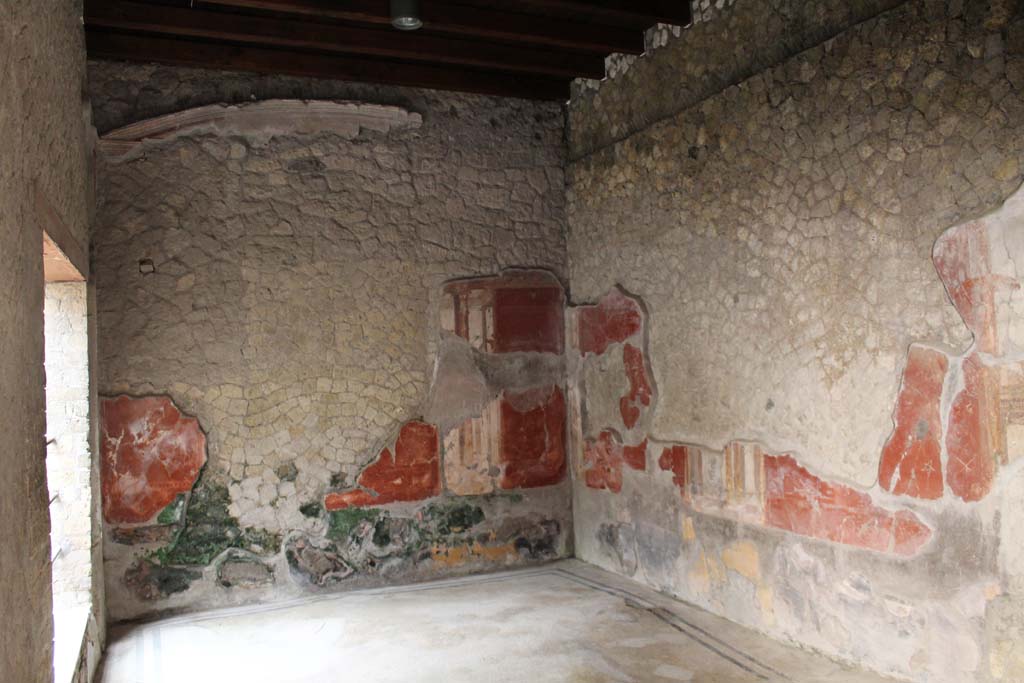
V.7 Herculaneum, March 2014. Looking towards east wall of
triclinium.
Foto Annette Haug, ERC
Grant 681269 DÉCOR.

V.7 Herculaneum. August 2013. Looking towards east wall of triclinium. Photo courtesy of Buzz Ferebee.

V.7 Herculaneum, March 2014. Detail from upper east wall in
triclinium.
Foto Annette Haug, ERC
Grant 681269 DÉCOR.
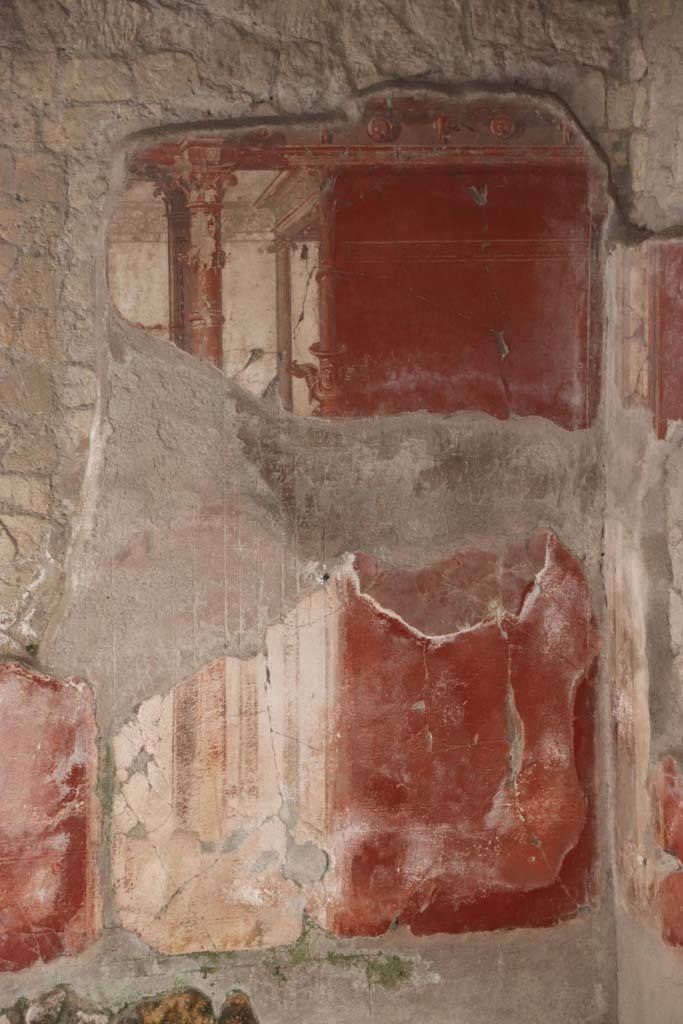
V.7 Herculaneum. September 2017.
Detail from east wall of triclinium in south-east corner. Photo courtesy of Klaus Heese.

V.7 Herculaneum. August 2013. Detail from east wall of triclinium. Photo courtesy of Buzz Ferebee.
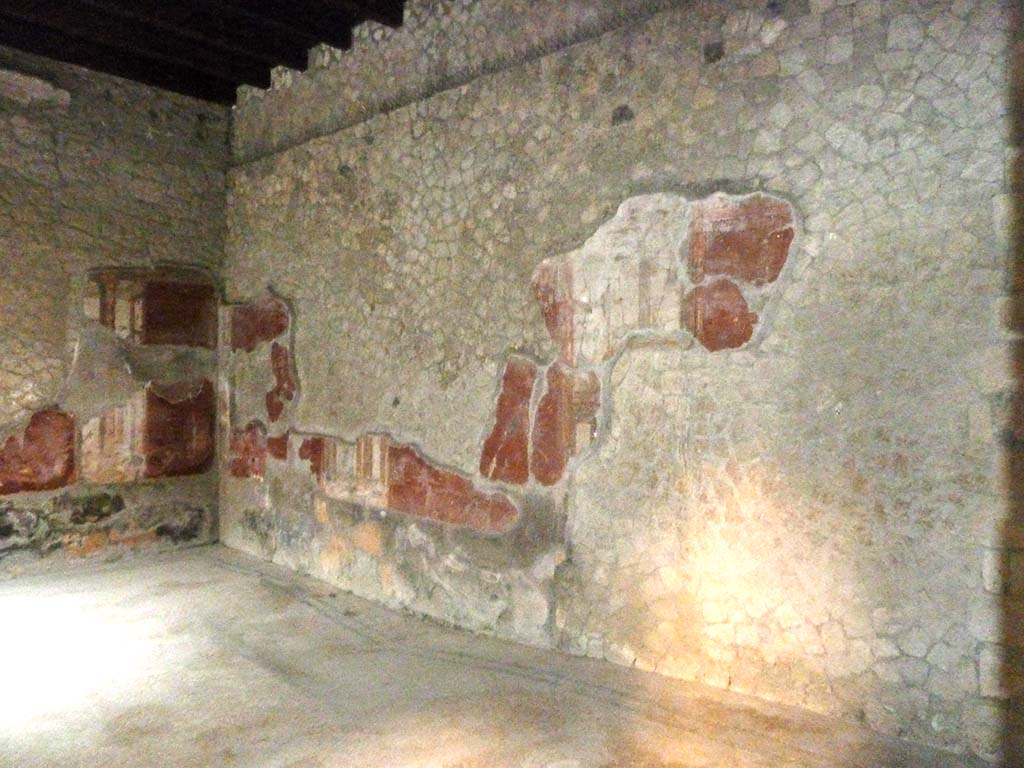
V.7 Herculaneum, September 2015. South wall of triclinium.
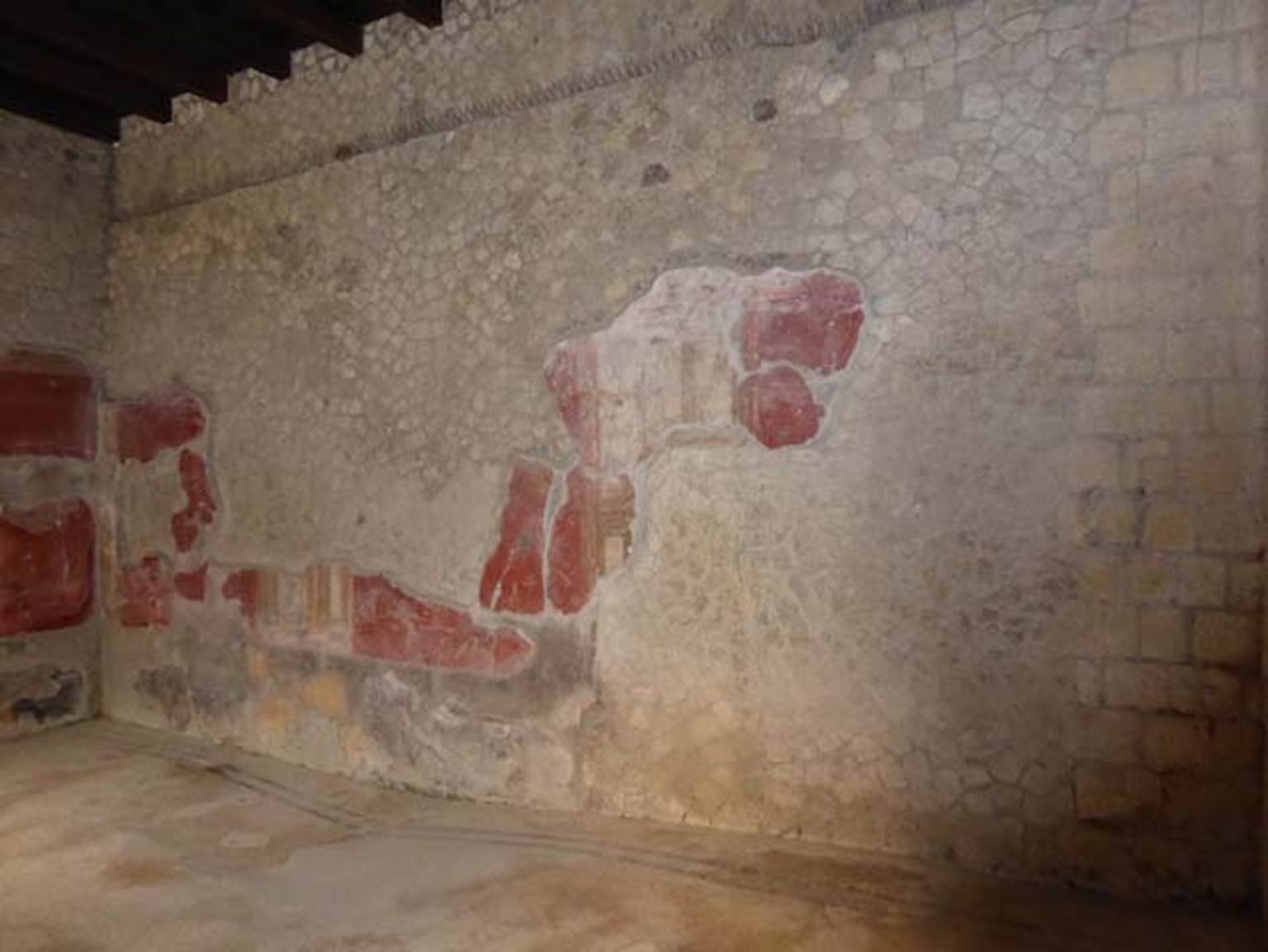
V.7 Herculaneum, October 2014. South wall of triclinium. Photo courtesy of Michael Binns.
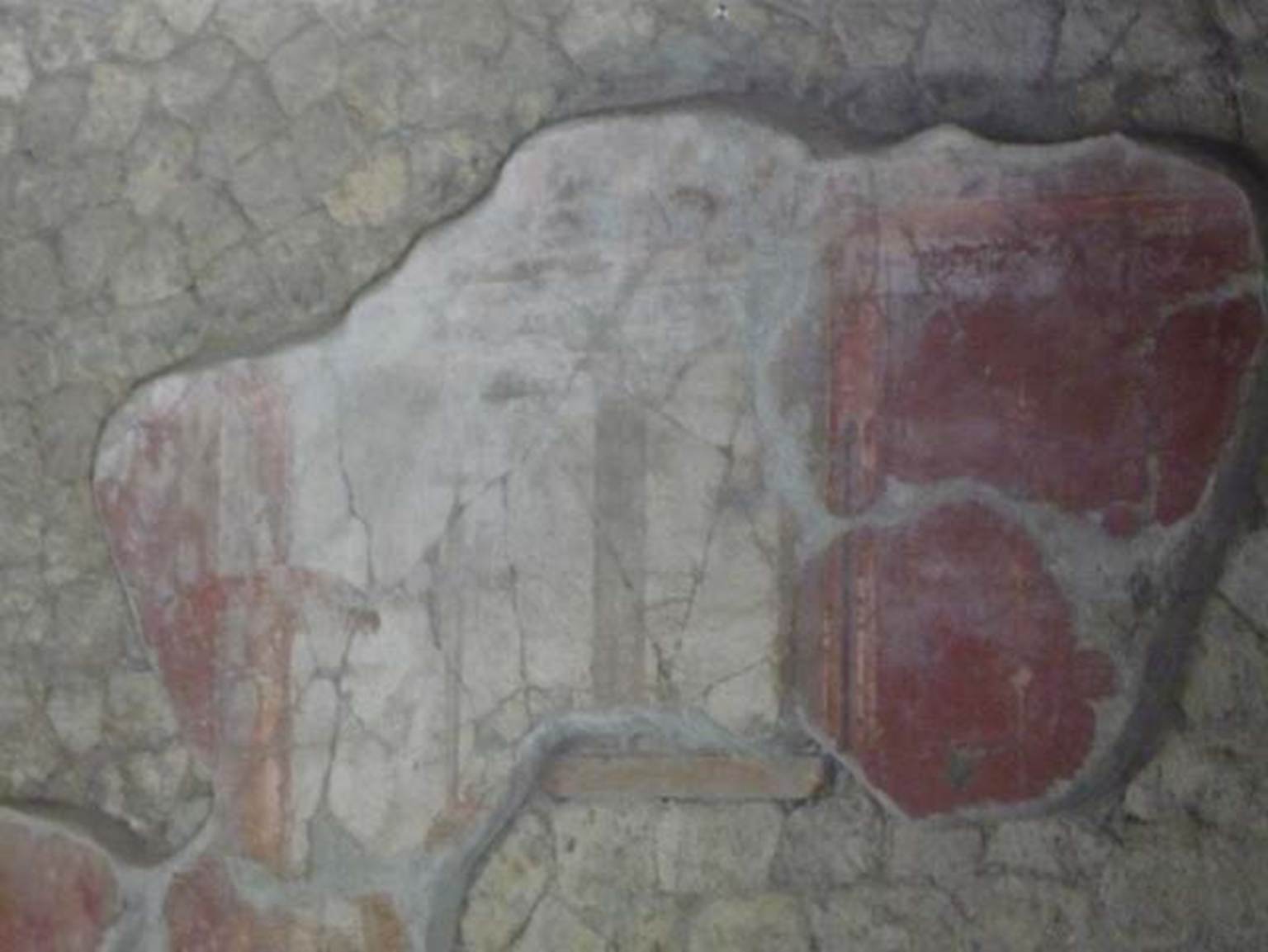
V.7 Herculaneum. August 2013. Detail from south wall of triclinium. Photo courtesy of Buzz Ferebee.

V.7 Herculaneum, September 2015. Looking towards the south-west corner of the triclinium. Photo courtesy of Michael Binns.

V.7 Herculaneum, September 2015. Remains of painted plaster from west wall of triclinium.

V.7 Herculaneum, September 2015. Remaining painted plaster on north wall of triclinium.
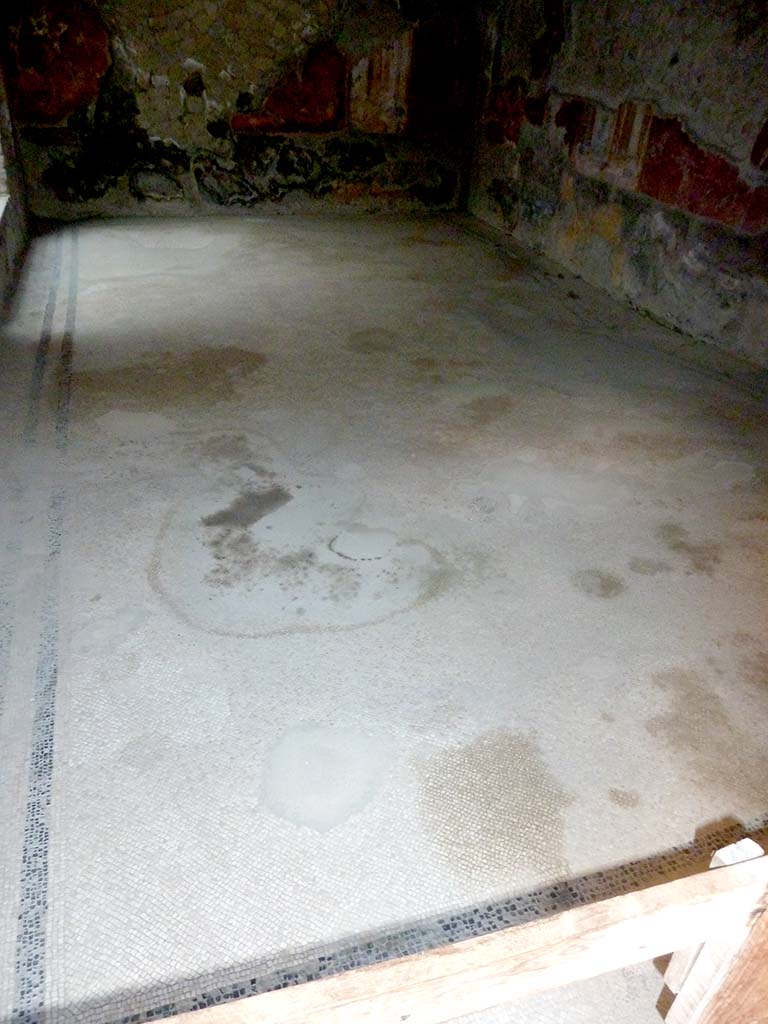
V.7 Herculaneum, September 2015. Flooring in triclinium.
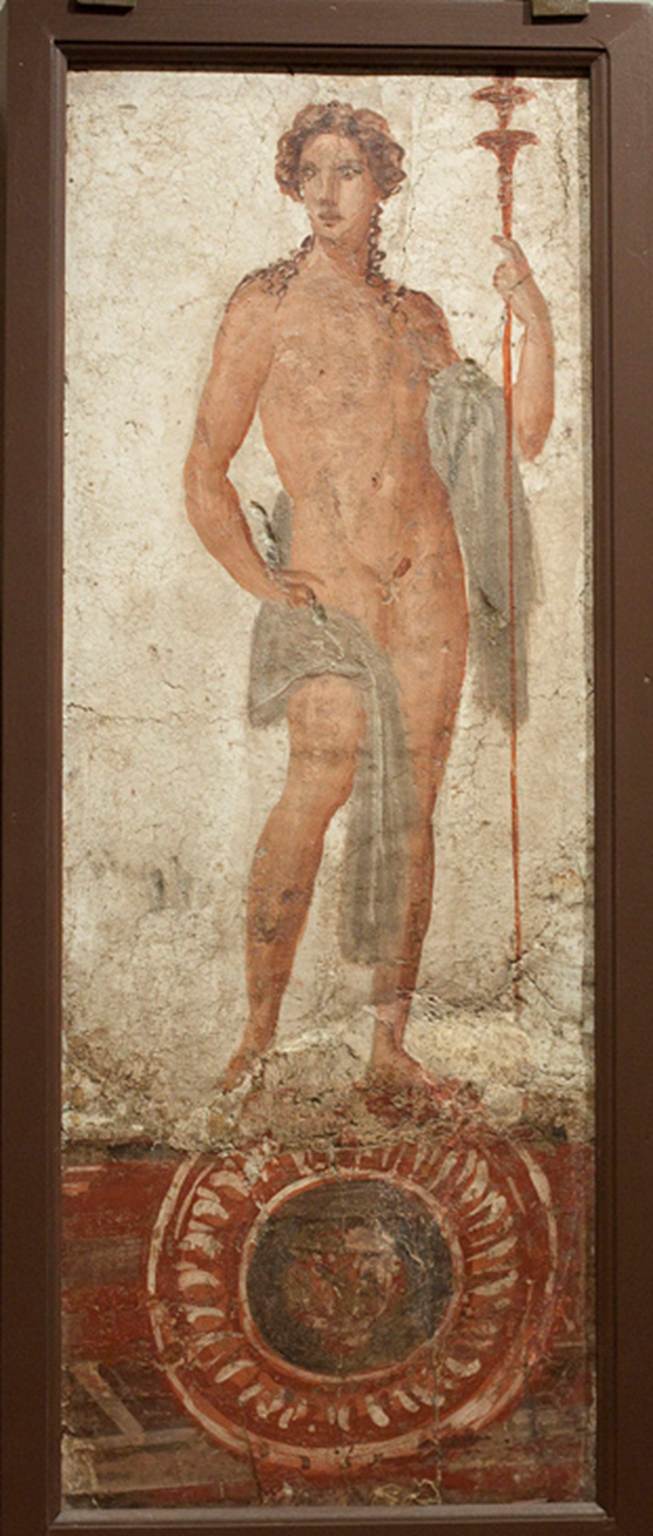
V.7 Herculaneum.
According to Dardenay and Eristov, this painting of Hermaphrodite was found on the upper west wall of the triclinium on 21st March 1746.
Now in Naples Archaeological Museum. Inventory number 8904.
See Dardenay A. et Eristov H. Le décor de la Casa di Nettuno et Anfitrite à Herculanum : réintégration et synthèse virtuelle des peintures in situ et alibi ; in Picta Fragmenta, Convegno Internazionale, settembre 2018, Napoli
Part 1 Part 2 Part 3 Part 4 Part 5 Part 6 Part 7 Plan